Rediscovering my passion
Published on January 26, 2023
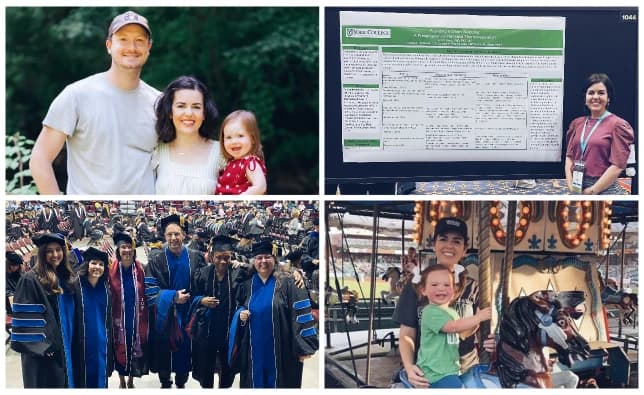
Ask 100 nurses why they wanted to become one and you will get 100 versions of their desire to help others. I am no different; it was only when I started my nursing schooling that I understood all of the different avenues and niches available. I distinctly remember my department chair, known for her tough but fair elusive tendencies, telling a room of novice nurses, “I expect 90% of you to go on and get graduate degrees.” I sat in that chair thinking well, okay, then I’m not going to be in the 10% that doesn’t! And so, I graduated, passed my boards, and accepted the only position I could find: night shift med-surg nurse at a hospital in the city with an hour commute. I immersed myself in the unit, saying yes, yes, and yes to extra shifts. Feeling everything, from the patients’ post-op woes to the charge nurses’ texts for help.
At the time, there was an obligatory waiting period of one year for nurses with no experience to work, and I assume to ensure their specialty track before starting graduate school. I followed the rules, as I always do—I worked and waited. Then in 2012, I started my online master’s program in nursing education. I stretched it out, took full advantage of the hospital’s tuition reimbursement, and after 11 semesters and 33 credits, I stepped foot on the campus for the very first time while being the lone master’s in nursing education graduate. Within those four years, I transferred specialties and fell in love with premature neonates. I gained my certification in neonatal intensive care, climbed the clinical ladder, took on new roles of preceptor and charge nurse, and even dabbled in hospital education. I again took to heart what my professors suggested, becoming an adjunct clinical instructor, and immediately enrolled in a PhD program, knowing it to be the preferred terminal degree for academia.
I joke that I did a tour of state schools, attending three different institutions in the Pennsylvania State System of Higher Education (PASSHE). The programs were rigorous, and I gained confidence with each new resource, topic, and degree.
Meeting my peers in doctoral school compelled me to search for a full-time nurse educator position. Again, I was a novice, teaching fundamentals to first-year associate degree student nurses. And while I easily transitioned to a career centered on students, the academic world proved to be more challenging. I felt isolated in my cubicle, without monetary resources for certification reimbursement or professional development, with unwritten rules I wasn’t privy to, and a quiet expectation of a 7:00 a.m.-4:00 p.m. Monday through Friday physical presence. Positive student interactions and feedback fueled my employment continuation. As I was finding my groove and growing professionally and physically, the year 2020 arrived. The pandemic struck when I was three months pregnant. Worry and uncertainty rocked me to my core because for the first time in my life I was unsure of my career path. Academia lacked its number one appeal: student interaction.
And so, after much thought, home alone day after day, I resigned and returned to full-time bedside nursing. I chose to work weekend nights, avoiding daycare throughout the rest of my pregnancy until my daughter was almost 2 years old. My return to bedside nursing proved to be rocky. My inability to produce adequate breast milk supply and subsequent postpartum depression was undiagnosed through my telehealth obstetrician check-ups. I no longer felt compelled to be married to the bedside, ignoring texts for help despite high bonuses. I flipped my sleep schedule every three days to accommodate weekend nights in the NICU and daytime parenthood throughout the week. I was four and a half years into my doctoral program, at the point where I was released to complete my dissertation. Without strict deadlines, I procrastinated. I had trouble prioritizing, and each menial task on my to do list felt like a mountain to climb. And of course, the dishes, the laundry, the dusting.
In 2021, I had a shingles outbreak. I messaged my primary care physician (PCP) and asked him why—I wasn’t even 33, and shingles is a disease of old age. He suggested generic ideas to decrease my stress levels, sharing that he had shingles in his 40s. I spoke with my husband, I contemplated, and I recognized a concrete need to change. The psychosocial aspects were easy to disregard, but this physical ailment demanded attention. I finally took some of the self-care ideas hospital management pressed and started therapy, joined a gym, and bought an obscenely large water bottle. It took a while to reap some benefits, but work buddies who turned into gym (and life) motivators kept me going.
I successfully defended my dissertation, graduated, and once again landed a career in academia. But this time, I was prepared. I knew how to interpret answers in my interview. I purposefully applied to institutions that valued baccalaureate-prepared, entry-level nurses and resources for students and faculty alike. I sent emails expressing my interest to deans and program chairs and thank you cards following virtual interviews. I was able to cite my earned PhD, now six years’ experience in higher education, and a smattering of publications and presentations to land an assistant professor of nursing position at a beautiful and historic four-year private college.
And while I am now navigating new systems, people, and processes, I have rediscovered my passion. I am renewed and once again filled with excitement. Thoughts of improving outcomes, future research studies, and student satisfaction replace monotony. And while I still cannot fully get away from the bedside (I retained a per diem staff nurse position), I am practicing presence and engagement with a standardized sleep schedule.
What I thought would be a straightforward path gifted me a two-year tangent. I am now humbled by the journey, and grateful for my current position. Personally, the time home with my daughter was a gift, strengthening our bond and learning about each other intimately. Professionally, it was a needed pause—a reminder to take a breath and pursue professional advancement without personal loss. And I recently stood in front of a group of engaged nursing students, explaining nursing as a profession, and defining caring while I modeled my repurposed desire to help others.
Jenna Davis, PhD, RNC-NIC, is an assistant professor at York College of Pennsylvania in York, Pennsylvania, USA. She is a member of Sigma’s Eta Eta Chapter.
Deep Dive
Topic
Career
Story Type
Stories
Global Region
North America
Deep Dive
Topic
Career
Story Type
Stories
Global Region
North America
More Stories in Career
Discover More Stories
Career / North America
Purpose: Walk or sink!
Published on July 29, 2025
By Ujaranne Renee Onuorah
Career / Global - Asia
Perseverance is the key to success
Published on May 20, 2025
By Lilian Yew Siew Mee
Career / North America
From humble beginnings to nurse educator
Published on November 25, 2024
By Karen Aul